
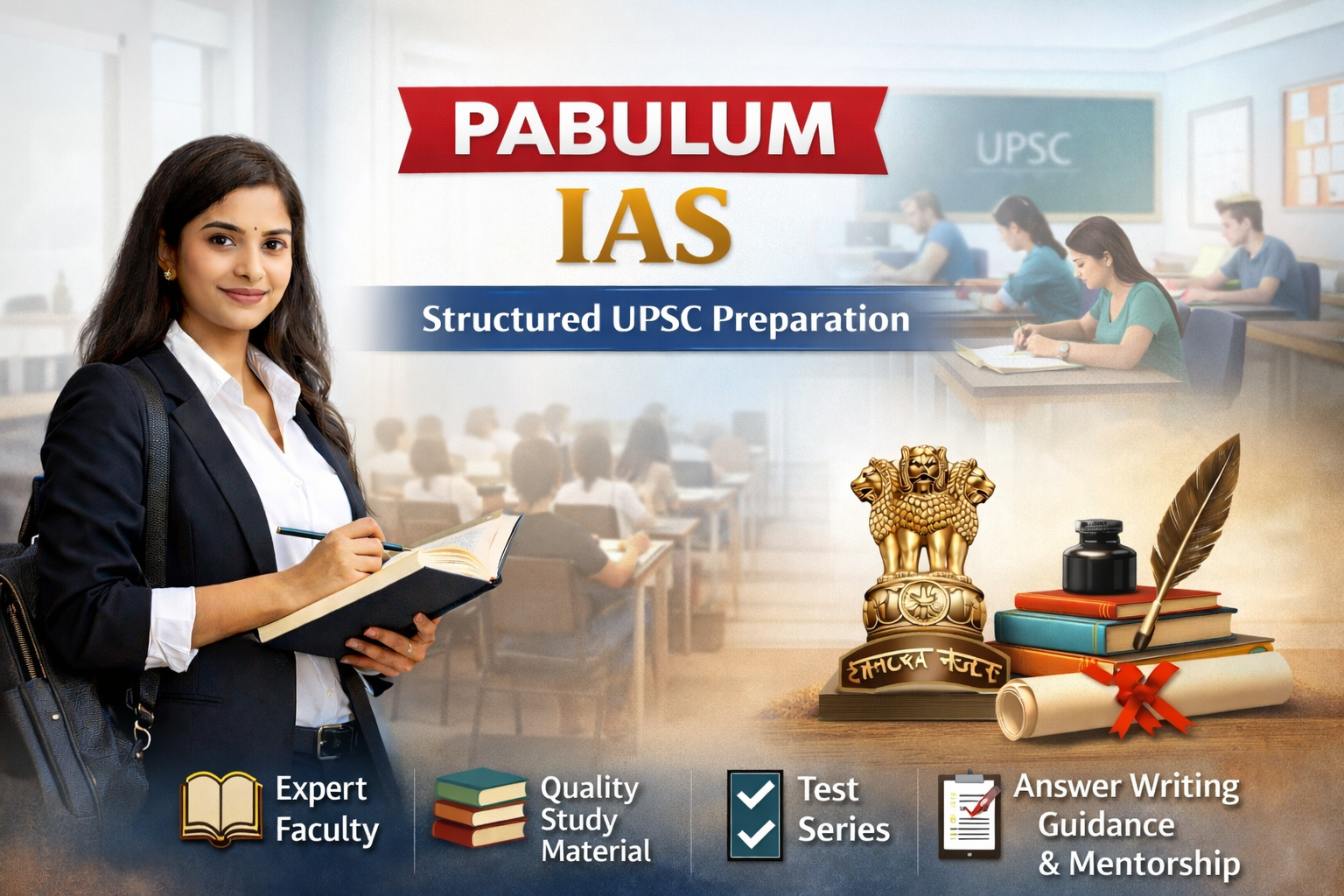
The Union Public Service Commission Civil Services Examination is considered one of the toughest competitive examinations in India. It demands not only vast knowledge but also analytical depth, ethical clarity, disciplined preparation, and strong answer-writing skills. With increasing competition and a constantly evolving examination pattern, aspirants require focused guidance, structured resources, and continuous evaluation to remain on the right path.
Pabulum IAS has emerged as a platform that emphasizes conceptual understanding, disciplined preparation, and exam-oriented learning. The institute focuses on simplifying the vast UPSC syllabus and helping aspirants build strong fundamentals while gradually enhancing analytical abilities and answer presentation skills. This article offers a comprehensive insight into the academic approach, teaching methodology, study resources, test series, mentorship framework, and overall relevance of Pabulum IAS for civil services aspirants.
Understanding the UPSC Civil Services Examination
Before exploring the role of coaching institutions, it is important to understand the nature of the UPSC examination. The Civil Services Examination consists of three stages:
- Preliminary Examination
- Main Examination
- Personality Test
Each stage evaluates different skill sets. The preliminary stage tests conceptual clarity and factual awareness through objective questions. The mains stage examines analytical thinking, depth of understanding, ethical reasoning, and writing skills. The personality test assesses communication abilities, decision-making skills, and overall suitability for administrative roles.
Given this complexity, a structured and well-guided approach to preparation becomes essential.
Introduction to Pabulum IAS
Pabulum IAS focuses on providing systematic civil services preparation with an emphasis on clarity, discipline, and relevance. The institute aims to bridge the gap between aspirants and the actual demands of the UPSC examination by aligning teaching methods with current trends and syllabus requirements.
The academic framework is designed to support beginners, repeat aspirants, and working professionals by offering structured courses, quality study material, regular assessments, and mentorship support.
Academic Philosophy and Teaching Approach
The teaching philosophy at Pabulum IAS revolves around building strong conceptual foundations and gradually transitioning aspirants toward advanced analytical learning.
Concept-Oriented Learning
Rather than rote memorization, emphasis is placed on understanding core concepts across subjects such as polity, history, geography, economy, environment, ethics, and governance. This approach helps aspirants tackle application-based and analytical questions effectively.
Syllabus-Centric Coverage
All subjects are taught strictly in alignment with the UPSC syllabus. This ensures relevance and prevents unnecessary information overload, which is a common challenge for aspirants.
Integrated Preparation Strategy
Preparation for prelims and mains is integrated wherever possible. This saves time and ensures continuity in learning, enabling aspirants to build depth without neglecting factual precision.
Courses and Programs Offered
Foundation Courses
Foundation programs are designed for aspirants who are beginning their civil services journey. These courses focus on:
- Comprehensive coverage of General Studies subjects
- Step-by-step explanation of basic and advanced concepts
- Early introduction to answer writing
- Regular internal assessments
The foundation course aims to establish a strong academic base and develop disciplined study habits.
Integrated Prelims and Mains Programs
Integrated programs are suitable for aspirants who wish to prepare for both stages simultaneously. These programs emphasize:
- Static subject mastery
- Current affairs integration
- Continuous testing and evaluation
- Answer writing practice
This approach ensures balanced preparation and reduces last-minute pressure.
Prelims-Focused Test Programs
The preliminary examination requires accuracy, speed, and smart elimination techniques. Prelims programs focus on:
- Subject-wise and full-length mock tests
- Analysis of previous year question trends
- Static and current affairs revision
- Performance tracking and improvement strategies
Mains Answer Writing Programs
The mains stage is often the most challenging part of the UPSC examination. Pabulum IAS places strong emphasis on structured answer writing.
Key features include:
- Daily and weekly answer writing assignments
- Model answers for reference
- Detailed evaluation and feedback
- Focus on content enrichment and presentation
These programs help aspirants improve coherence, clarity, and scoring potential.
Faculty and Mentorship Support
Faculty guidance plays a crucial role in shaping an aspirant’s preparation strategy.
Experienced Teaching Team
The faculty comprises subject experts with experience in civil services coaching. Their teaching methods focus on clarity, relevance, and practical exam application.
Personalized Mentorship
Mentorship sessions guide aspirants in:
- Creating realistic study plans
- Managing revision cycles
- Identifying strengths and weaknesses
- Maintaining motivation and consistency
Personalized guidance ensures that aspirants stay focused and confident throughout their preparation journey.
Study Material and Academic Resources
Quality study material is a cornerstone of effective UPSC preparation.
Structured Notes
Class notes are concise, well-organized, and syllabus-oriented. They highlight key concepts, definitions, examples, and analytical perspectives useful for mains answers.
Current Affairs Coverage
Current affairs are covered in an issue-based manner and integrated with static subjects. This helps aspirants understand the relevance of contemporary developments in governance, economy, environment, and international relations.
Practice Material
Practice questions and assignments are designed based on UPSC trends. They encourage regular revision and concept application.
Test Series and Evaluation System
Testing and evaluation are essential for exam readiness.
Prelims Test Series
Prelims test series include:
- Topic-wise tests
- Full-length mock exams
- Performance analysis reports
These tests help aspirants improve accuracy and time management.
Mains Test Series
Mains test series focus on descriptive answers and include:
- Question papers aligned with UPSC standards
- Detailed evaluation
- Individual feedback
Regular testing helps aspirants refine answer structure and content quality.
Importance of Discipline and Consistency
UPSC preparation is a long-term process requiring sustained effort. Pabulum IAS emphasizes disciplined study routines and consistent practice.
Study Planning
Aspirants are encouraged to follow structured timetables that balance learning, revision, and testing.
Revision Strategy
Multiple revision cycles are built into the academic plan to strengthen retention and recall.
Learning Environment and Peer Interaction
A supportive academic environment enhances learning outcomes.
Interactive Classes
Classes encourage discussion, doubt resolution, and critical thinking. Aspirants are motivated to actively participate in the learning process.
Peer Learning
Peer interaction fosters collaborative learning and healthy competition. Group discussions help aspirants develop diverse perspectives on complex issues.
Interview Preparation and Personality Development
The personality test assesses an aspirant’s suitability for administrative responsibilities.
Interview Guidance
Interview programs focus on:
- Mock interviews
- Feedback sessions
- Opinion building on current issues
This preparation helps aspirants improve confidence, communication skills, and clarity of thought.
Challenges Faced by Aspirants and Institutional Support
Aspirants often struggle with:
- Vast syllabus
- Information overload
- Lack of direction
- Exam anxiety
A structured coaching environment helps address these challenges through clarity, guidance, and continuous academic support.
Long-Term Value of Civil Services Preparation
Civil services preparation builds valuable life skills such as:
- Analytical thinking
- Ethical reasoning
- Time management
- Awareness of public policy
These skills remain beneficial even beyond the examination.
Frequently Asked Questions (FAQs)
1. Is Pabulum IAS suitable for beginners?
Yes, foundation courses are designed to help beginners understand concepts from the basic level.
2. Does the institute offer integrated Prelims and Mains preparation?
Yes, integrated programs are available to ensure balanced preparation for both stages.
3. How important are test series in UPSC preparation?
Test series help aspirants evaluate progress, improve time management, and understand exam patterns.
4. Is current affairs preparation included?
Yes, current affairs are covered regularly and integrated with static subjects.
5. Does the institute provide answer writing practice?
Yes, answer writing programs with detailed feedback are a key part of mains preparation.
6. Can working professionals join the courses?
Yes, programs are structured to accommodate the needs of working professionals.