
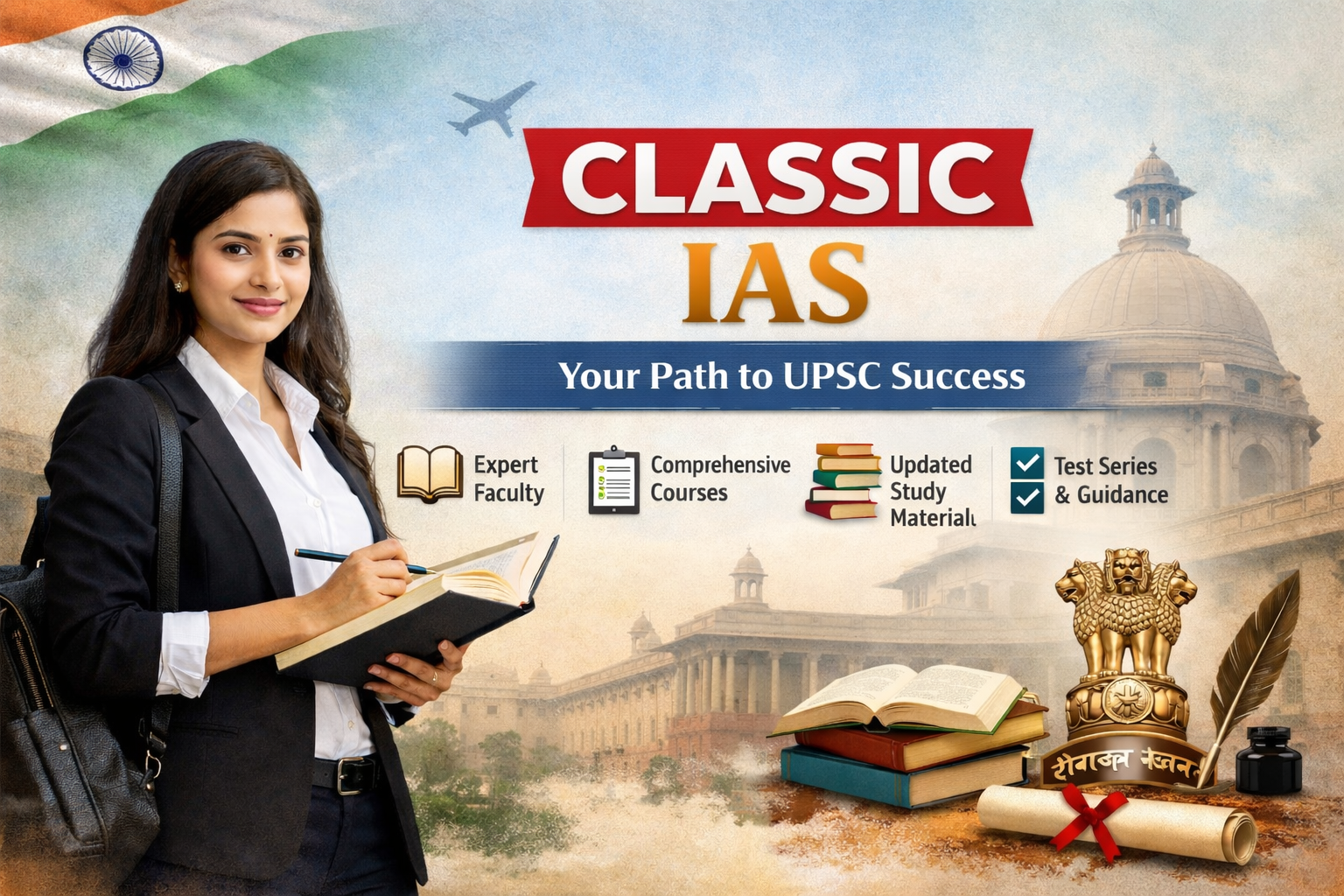
The Civil Services Examination conducted by the Union Public Service Commission is considered one of the most competitive examinations in India. Every year, lakhs of aspirants appear for the exam with the dream of becoming an IAS, IPS, IFS, or other prestigious civil servants. The preparation journey is demanding, requiring conceptual clarity, strategic planning, disciplined study habits, and continuous evaluation. In this context, guidance from a reputed coaching institute plays a significant role in shaping an aspirant’s preparation strategy.
Classic IAS has gained recognition among civil services aspirants for its structured approach to UPSC preparation, focus on fundamentals, and emphasis on exam-oriented learning. This article provides an in-depth overview of Classic IAS, its teaching philosophy, academic framework, study resources, test series, mentorship system, and overall contribution to civil services preparation.
The Importance of Structured IAS Coaching
The UPSC Civil Services Examination is not a test that can be cleared through random reading or last-minute preparation. It demands a well-planned approach covering a vast syllabus that includes history, geography, polity, economy, environment, science and technology, ethics, and current affairs. Aspirants must also develop analytical thinking, answer-writing skills, and interview readiness. This article provides an in-depth overview of Classic IAS, its teaching philosophy, academic framework, study resources, test series, mentorship system, and overall contribution to civil services preparation.
A structured coaching program helps aspirants in multiple ways:
- Systematic syllabus coverage
- Clear understanding of UPSC exam pattern
- Guidance on current affairs integration
- Regular practice through mock tests
- Mentorship for motivation and direction
Institutes like Classic IAS aim to provide a comprehensive learning ecosystem that supports aspirants throughout their preparation journey.
Overview of Classic IAS
Classic IAS is known for offering civil services coaching with a strong academic foundation and student-centric teaching methodology. The institute focuses on building conceptual understanding while aligning preparation with the latest UPSC trends. It caters to aspirants at different stages of preparation, including beginners, repeaters, and working professionals.
The learning environment is designed to encourage consistency, discipline, and critical thinking. The institute emphasizes quality over quantity, helping aspirants focus on relevant topics rather than overwhelming them with excessive information. This article provides an in-depth overview of Classic IAS, its teaching philosophy, academic framework, study resources, test series, mentorship system, and overall contribution to civil services preparation.
Teaching Philosophy and Academic Approach
The academic philosophy followed at Classic IAS centers on clarity, consistency, and application-based learning. The institute believes that success in the civil services examination comes from understanding concepts deeply and applying them effectively in both objective and descriptive answers.
Concept-Based Learning
Each subject is taught with a focus on core concepts rather than rote memorization. This approach enables aspirants to tackle analytical questions in both Prelims and Mains examinations.
Syllabus-Oriented Preparation
Classes and study materials are strictly aligned with the UPSC syllabus. This ensures that aspirants remain focused on exam-relevant topics and avoid unnecessary distractions.
Integrated Current Affairs Coverage
Current affairs are integrated with static subjects to help students understand real-world applications of theoretical concepts. This integration is particularly useful for Mains answer writing and the interview stage. This article provides an in-depth overview of Classic IAS, its teaching philosophy, academic framework, study resources, test series, mentorship system, and overall contribution to civil services preparation.
Faculty and Academic Mentorship
Faculty quality is a crucial factor in IAS coaching. Classic IAS places significant emphasis on experienced educators who understand the demands of the UPSC examination.
Experienced Faculty Members
The faculty consists of subject experts with extensive teaching experience. They simplify complex topics and present them in an easy-to-understand manner. This article provides an in-depth overview of Classic IAS, its teaching philosophy, academic framework, study resources, test series, mentorship system, and overall contribution to civil services preparation.
Individual Mentorship
Mentorship is provided to help aspirants overcome challenges such as lack of direction, low confidence, and exam anxiety. Personalized guidance assists students in planning their preparation, revising effectively, and staying motivated.
Courses and Programs Offered
Classic IAS offers a range of courses designed to meet the diverse needs of UPSC aspirants.
Foundation Courses
Foundation programs are ideal for beginners who are starting their civil services preparation. These courses cover the complete syllabus in a structured manner, focusing on concept building and basic answer-writing skills. This article provides an in-depth overview of Classic IAS, its teaching philosophy, academic framework, study resources, test series, mentorship system, and overall contribution to civil services preparation.
Integrated Prelims and Mains Programs
Integrated programs ensure that aspirants prepare for both stages simultaneously. This approach helps in saving time and maintaining continuity between objective and descriptive preparation.
Optional Subject Guidance
Optional subjects can significantly influence final scores. The institute provides guidance for selected optional subjects with a focus on syllabus coverage, answer structure, and scoring techniques. This article provides an in-depth overview of Classic IAS, its teaching philosophy, academic framework, study resources, test series, mentorship system, and overall contribution to civil services preparation.
Test Series Programs
Separate test series are conducted for Prelims and Mains. These programs help aspirants assess their preparation level and improve performance through regular evaluation. This article provides an in-depth overview of Classic IAS, its teaching philosophy, academic framework, study resources, test series, mentorship system, and overall contribution to civil services preparation.
Study Material and Learning Resources
High-quality study material is essential for effective UPSC preparation. Classic IAS provides curated resources designed to meet the specific requirements of the examination. This article provides an in-depth overview of Classic IAS, its teaching philosophy, academic framework, study resources, test series, mentorship system, and overall contribution to civil services preparation.
Comprehensive Class Notes
Class notes are concise, structured, and updated according to the latest syllabus and exam trends. They emphasize key concepts, definitions, examples, and keywords relevant for answer writing.
Current Affairs Notes
Regular current affairs notes and compilations help aspirants stay updated with national and international developments, government policies, and socio-economic issues.
Practice Questions and Assignments
Practice questions are designed based on previous year question trends. Assignments encourage regular revision and application of knowledge. This article provides an in-depth overview of Classic IAS, its teaching philosophy, academic framework, study resources, test series, mentorship system, and overall contribution to civil services preparation.
Role of Test Series in Preparation
Mock tests are an indispensable part of civil services preparation. They help aspirants understand exam patterns, manage time effectively, and improve accuracy.
Prelims Test Series
The Prelims test series includes multiple objective tests covering both static subjects and current affairs. These tests help aspirants improve elimination techniques and question-solving speed.
Mains Test Series
Mains test series focus on descriptive answer writing. Detailed evaluation and feedback help students improve content relevance, structure, and presentation.
Performance Analysis
After each test, performance analysis is conducted to help aspirants identify strengths and areas that need improvement. This feedback-driven approach enhances preparation efficiency.
Discipline and Time Management
One of the biggest challenges faced by IAS aspirants is maintaining discipline over a long preparation period. Classic IAS emphasizes the importance of consistency and time management.
Structured Study Plans
Students are guided to follow realistic study plans that balance learning, revision, and practice.
Regular Revision Strategy
Multiple revision cycles are encouraged to reinforce concepts and improve retention. Revision schedules are designed to prevent burnout while ensuring syllabus completion.
Learning Environment and Peer Interaction
A positive learning environment contributes significantly to motivation and productivity.
Interactive Classroom Sessions
Classroom sessions encourage interaction, discussion, and critical thinking. Aspirants are motivated to ask questions and participate actively.
Peer Learning Opportunities
Peer interaction promotes healthy competition and collaborative learning. Group discussions help in opinion building and understanding diverse perspectives.
Preparation for the Interview Stage
The Personality Test is the final stage of the Civil Services Examination. It evaluates an aspirant’s personality, communication skills, and suitability for administrative roles.
Interview Guidance Programs
Interview guidance programs include mock interviews, feedback sessions, and personality development exercises.
Current Affairs and Opinion Development
Special emphasis is placed on current affairs and opinion building to help aspirants answer questions confidently and logically during the interview.
Challenges Faced by Aspirants and Coaching Support
UPSC aspirants face several challenges, including information overload, lack of consistency, and exam pressure. A structured coaching program helps address these issues by providing clarity, guidance, and continuous support.
Classic IAS aims to create a balanced preparation framework that supports aspirants academically and mentally throughout their journey.
Frequently Asked Questions (FAQs)
1. Is Classic IAS suitable for beginners?
Yes, foundation courses are designed for beginners who want to start their UPSC preparation from scratch.
2. Does the institute offer integrated Prelims and Mains preparation?
Yes, integrated programs are available to ensure simultaneous preparation for both stages of the examination.
3. How important are test series in IAS preparation?
Test series are essential for evaluating preparation, improving time management, and understanding exam patterns.
4. Are current affairs covered regularly?
Yes, current affairs are covered through integrated classes, notes, and regular updates.
5. Does the institute provide interview guidance?
Yes, interview guidance programs include mock interviews, feedback sessions, and personality development support.
6. Can working professionals enroll in the courses?
Yes, programs are structured to accommodate the needs of working professionals with focused and disciplined study modules.